Crohn’s Disease: From Precise Diagnosis to Innovative Therapy and Organ-Sparing Surgery in Germany
Chronic abdominal pain, persistent diarrhea, or unexplained weight loss are frequently the signs of Crohn’s disease—a severe, chronic inflammatory bowel disease. Unlike other gastrointestinal disorders, this diagnosis demands utmost precision in diagnostics and continuous, expert management.
For patients facing treatment resistance or complex complications, receiving medical care in specialized German clinics unlocks access to advanced European protocols, next-generation targeted therapies, and expert organ-sparing surgery.
Table of Contents:
- What is Crohn’s Disease and Why is Diagnosis So Complex?
- Typical Manifestations and Dangerous Complications
- The Expert Diagnostic Standard in Germany
- Modern Principles of Treatment: From Targeted Biologics to Organ-Sparing Surgery
- Leading German Experts in Crohn’s Disease Treatment
- How We at GHP Pulse Organize Your Medical Journey to Germany
What is Crohn’s Disease and Why is Diagnosis So Complex?
Crohn’s disease is a chronic inflammatory condition affecting the entire gastrointestinal tract. While ulcerative colitis is restricted to the colon, Crohn’s can strike any part of the GI tract—from the mouth to the anus. Most frequently, inflammation localizes at the junction of the small and large intestines (the terminal ileum).
The disease is characterized by two key anatomical features:
- Discontinuous (Skip) Lesions: Inflamed segments of the intestine alternate with completely healthy tissue zones.
- Transmural Inflammation: The inflammatory process does not merely affect the superficial mucosal lining, but penetrates through all layers of the intestinal wall. This deep inflammation explains the high propensity for dangerous complications—fistulas and strictures (narrowings).
Because the clinical presentation of Crohn’s disease varies wildly among individuals, symptoms often mimic other pathologies (such as irritable bowel syndrome, appendicitis, or infections), causing the path to a correct diagnosis in a patient's home country to take years.
Typical Manifestations and Dangerous Complications
The disease typically follows a relapsing-remitting course, where periods of remission alternate with acute flare-ups.
Core Symptoms:
- Spastic abdominal pain and discomfort (especially in the right lower quadrant).
- Persistent diarrhea (often without visible blood, distinguishing it from colitis).
- Chronic fatigue, lethargy, and weight loss.
- Low-grade or high fever during active flare-ups.
Extra-Intestinal Manifestations:
Crohn’s disease frequently extends beyond the gut. Approximately one-third of patients develop systemic or secondary complications:
- joint inflammation (arthritis);
- skin lesions (erythema nodosum, pyoderma gangrenosum);
- eye inflammation (uveitis, episcleritis);
- liver and biliary tract disorders (primary sclerosing cholangitis).
All these manifestations require coordinated management by specialists across multiple medical fields.
Severe Complications Requiring Expert Intervention:
- Strictures: Repeated inflammation leaves scars that narrow the intestinal lumen, causing mechanical obstructions to the passage of food.
- Fistulas and Abscesses: Inflammatory tracts penetrating through the intestinal wall with the formation of pathological pathways (into neighboring organs or onto the skin) and purulent cavities requiring urgent intervention.
- Malabsorption: Due to small intestine damage, the absorption of iron, vitamins B12, D, zinc, and folic acid is impaired, leading to severe anemia and osteoporosis.
The Expert Diagnostic Standard in Germany
Establishing an accurate diagnosis in leading German clinics is built on a rigorous interdisciplinary protocol that eliminates errors:
- Advanced Laboratory Diagnostics: Beyond standard blood panels and systemic inflammatory markers (CRP, ESR), stool analysis for calprotectin—a specific protein allowing reliable differentiation between true inflammatory processes and functional disorders (such as IBS)—plays a crucial role.
- Complete blood count and iron levels provide precise information regarding potential anemia.
- Targeted checks of vitamins and micronutrients (including vitamin B12, folic acid, vitamin D, and zinc) allow timely detection and correction of deficiencies in vital vitamins, micronutrients, and protein.
- Albumin is used as a key laboratory marker for assessing the patient's protein balance.
- Ileocolonoscopy with Biopsy: The primary diagnostic method for Crohn’s disease. The physician examines the entire colon and the terminal section of the small intestine using a colonoscope—a flexible thin probe with a miniature video camera and light source at the tip. During the examination, the specialist identifies ulcers and takes tissue samples for histology to search for specific cell clusters known as granulomas.
- MR Enterography with Contrast (MR Sellink): A high-precision scanning method free of radiation (unlike CT or X-rays). Before the procedure, the patient drinks a special solution that expands the loops of the small intestine, while intravenous contrast highlights inflammatory foci. This allows the physician to evaluate intestinal wall thickness, the degree of narrowing, and promptly detect hidden fistulas and abscesses.
Modern Principles of Treatment: From Targeted Biologics to Organ-Sparing Surgery
The goal of modern gastroenterology is not just to temporarily relieve symptoms, but to achieve deep mucosal healing and sustained remission.
Next-Generation Medical Therapy:
- Induction Therapy: Rapid suppression of acute inflammation using local (budesonide) or systemic corticosteroids (prednisolone).
- Immunomodulators: Control of immune system activity to maintain remission (azathioprine, 6-mercaptopurine, methotrexate).
- Innovative Biological Therapy: Advanced precision-targeted drugs—TNF-alpha blockers (adalimumab, infliximab), integrin inhibitors (vedolizumab), and interleukin blockers IL-12/23 (ustekinumab).
- Small Molecules (JAK inhibitors, S1P modulators): The newest selective oral substances in tablet form, such as upadacitinib or ozanimod. They provide highly effective additional treatment options, especially in situations where biological therapy is insufficiently effective or poorly tolerated by the patient.
- Nutritional Support: Correction of identified deficiencies in vitamins, micronutrients, and protein balance under strict laboratory control.
When Surgery is Indicated:
Despite the development of modern therapy methods, a portion of patients require surgical intervention during the course of the disease. Surgery in specialized visceral and colorectal surgery centers is considered in the following cases:
- Strictures leading to intestinal obstruction or causing symptoms that cannot be relieved by medication.
- Fistulas and abscesses unresponsive to conservative treatment.
- Bowel perforation (rupture).
- Acute attacks that cannot be controlled even with strong medications.
- Risk of cancer development or detection of tumor cells in the intestine.
Organ-Sparing Surgery:
Surgical intervention does not lead to complete cure, as the disease may subsequently occur in remaining parts of the intestine. Therefore, the main task for German surgeons is to remove the minimum necessary volume of tissue using gentle laparoscopic techniques and strictureplasty. Close collaboration between gastroenterologists and abdominal surgeons within interdisciplinary boards (IBD Board) allows for individual determination of the optimal timing and scope of surgery for each patient.
Leading German Experts in Crohn’s Disease Treatment
Treatment of Crohn’s disease is most effectively conducted in specialized interdisciplinary centers—in Germany called CED-Zentren (from German Chronisch entzündliche Darmerkrankungen — inflammatory bowel diseases). In such centers, complex patient care is coordinated by recognized experts who participate in the development of international protocols (ECCO/DGVS) and the implementation of innovative drugs.
Behind every prominent professor stands a strong university team of top-tier specialist physicians. These specialized teams, led by leading gastroenterologists and surgeons, conduct daily diagnostics, select therapies, and manage patients at all stages.
- Prof. Dr. med. Axel Dignaß (Frankfurt am Main)
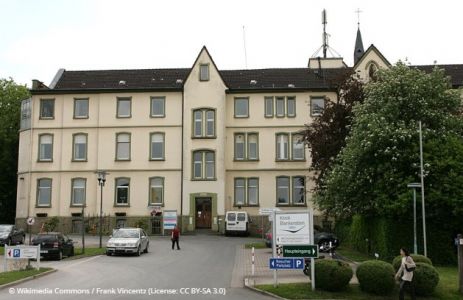
Chief Physician of Medical Clinic I at AGAPLESION Markus Krankenhaus.
Past President of the European Crohn’s and Colitis Organisation (ECCO). One of the world's leading specialists in the use of biological therapy and small molecules (JAK inhibitors, S1P modulators) for severe and refractory forms of the disease. - Prof. Dr. med. Britta Siegmund (Berlin)
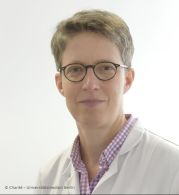
Director of the Clinic for Gastroenterology and Infectiology at Charité – Universitätsmedizin Berlin (Campus Benjamin Franklin).
Vice President of the German Society for Gastroenterology (DGVS). Leading expert in intestinal pathophysiology and immunomodulatory therapy, specializing in complex systemic cases of Crohn's disease with extra-intestinal manifestations. - Prof. Dr. med. Stefan Schreiber (Kiel)
Director of the Clinic for Internal Medicine I at Universitätsklinikum Schleswig-Holstein (UKSH, Kiel Campus).
One of the most cited researchers of inflammatory bowel diseases (IBD) in the world, who stood at the origins of introducing targeted biological drugs in Europe. Specializes in atypical, rapidly progressing, and refractory forms of Crohn's. - Prof. Dr. med. Torsten Kucharzik (Lüneburg)
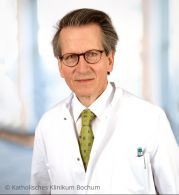
Chief Physician of the Clinic for Gastroenterology at Klinikum Lüneburg.
Official coordinator of the German national S3 clinical guidelines for the diagnosis and treatment of Crohn’s disease. Pioneer of high-precision ultrasound diagnostics (High-End Ileocolon Ultrasound) for non-invasive monitoring of mucosal healing. - Prof. Dr. med. Bernd Bokemeyer (Minden) Head of the Interdisciplinary Crohn’s and Colitis Center Minden (Interdisziplinäres Crohn Colitis Centrum Minden, in academic affiliation with Universitätsklinikum Schleswig-Holstein, Campus Kiel).
A leading expert in outpatient IBD management and national patient registry development. Specializes in long-term clinical monitoring, personalized biological therapy selection, and implementing high-precision protocols for remission control. - Prof. Dr. med. Andreas Stallmach (Jena)
Director of Medical Clinic IV (Gastroenterology, Hepatology, and Infectious Diseases) at Universitätsklinikum Jena.
Co-author of the German National S3 Clinical Guidelines for IBD management. A leading authority in intestinal clinical immunology, specializing in multidisciplinary care for refractory Crohn’s disease and complex systemic complications.
How We at GHP Pulse Organize Your Medical Journey to Germany
The path to recovery in Crohn’s disease requires impeccable precision, expertise of specialized clinics, and comfortable logistics. The GHP Pulse team takes care of organizing all stages of treatment in Germany:
- Remote audit and second opinion: We help collect, translate, and transfer your medical documents to leading specialized professors in Germany for diagnosis evaluation and therapy adjustment.
- Matching with an expert center: We coordinate treatment in leading university centers and clinics possessing the strongest gastroenterology and visceral surgery departments.
- Comprehensive support: From official clinic invitation letters and visa support to a personal medical translator and solving all everyday issues on-site.
Facing challenges in treating Crohn’s disease and looking for an expert solution? Contact us by phone or WhatsApp: +49 170 62 47 020 or submit a consultation request on the website.