

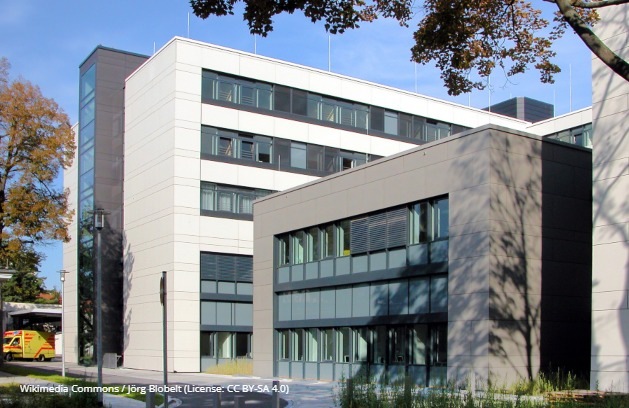
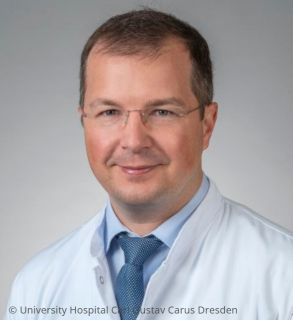
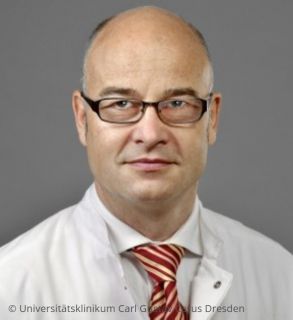
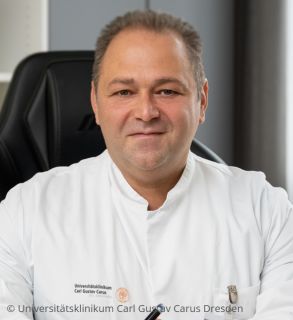
The University Hospital Carl Gustav Carus Dresden
Carl Gustav Carus University Hospital Dresden has consistently ranked among the leading hospitals in Germany for four consecutive years since 2021. In 2025, the hospital ranked 13th in Germany in the Newsweek “World’s Best Hospitals” ranking. The ranking is based on an extensive survey of more than 85,000 medical experts, patient satisfaction data, and hospital hygiene standards. The hospital achieved a score of 78.93.
Medical training in Dresden dates back to the mid-18th century. In 1748, a medical-surgical college was established to provide basic medical education to military surgeons. In 1815, King Frederick Augustus I founded the Surgical Medical Academy, where Carl Gustav Carus (1789–1869) served as a professor of obstetrics. The academy operated until 1864.
Facts and Figures
Today, Dresden University Hospital is a maximum-care medical institution covering the full spectrum of modern medicine. It comprises:
- 25 clinics and outpatient departments
- 7 institutes
- 19 interdisciplinary centers
These units work in close collaboration with the clinical and research institutes of the Faculty of Medicine at the Technical University of Dresden.
The hospital buildings and their technical infrastructure are continuously modernized in accordance with the latest international standards. At the end of 2018, a new emergency surgery building was commissioned, featuring:
- 17 state-of-the-art operating rooms
- An intensive care unit
- Interdisciplinary outpatient centers
- Four emergency departments with capacity for 132 patients
To ensure comprehensive medical care, the hospital employs approximately 1,000 physicians and 2,000 nurses and medical assistants.
In addition to patient care, the hospital is actively involved in medical education and professional training.
Key Areas of Expertise
Dresden University Hospital provides medical services across all specialties. It also includes:
- A kidney and bone marrow transplantation unit
- A specialized center for the treatment of rare diseases
More than 20 highly specialized clinics and outpatient departments cover all patient needs, from ophthalmology to traumatology and nuclear medicine. The hospital also includes a center for dentistry and maxillofacial surgery.
Center for Trauma, Orthopedics and Plastic Surgery
The Center for Trauma, Orthopedics and Plastic Surgery is one of the largest in Germany.
For many years, it was the only center in the region performing high-volume joint replacement surgeries for knee and hip prostheses.
Today, the center offers a broad range of procedures, particularly for complex conditions and patients of all age groups. It specializes in the treatment of congenital and acquired hip disorders, such as hip dysplasia, as well as hip replacement surgeries, including cases with extensive joint defects.
Endoprosthetics Center
The comprehensive endoprosthetics center meets the highest standards, enabling it to address all challenges associated with hip and knee joint replacement.
The certified Endoprosthetics Center at Dresden University Hospital was among the first in Germany to receive the designation of a maximum-care facility.
Services offered by the Department of Orthopedics include:
- Traumatology
- Hand surgery
- Sports medicine
- Treatment of spinal tumors
- Spine surgery
- Treatment of shoulder and elbow disorders
- Pain therapy
- Treatment of foot and ankle conditions
- Reconstructive surgery
- Pediatric orthopedics
Department of Gynecologic Oncology and Breast Care
As part of the Dresden Comprehensive Cancer Center — one of 11 certified oncology centers in Germany — the Department of Gynecologic Oncology and the Breast Cancer Center are certified by the German Cancer Society.
Patients are offered a full range of diagnostic and surgical treatments for gynecological diseases, including:
- Complex oncologic surgeries
- Minimally invasive and robot-assisted procedures (da Vinci system)
- Medical oncology treatments
- Radiation therapy
All treatments are provided in accordance with the latest scientific standards. Interdisciplinary collaboration and advanced technology ensure highly individualized, high-quality care.
The Department of Gynecology places special emphasis on minimally invasive surgical techniques, including robot-assisted laparoscopy for conditions such as endometriosis and fibroids.
As part of the University Center for Pediatric Gynecology, the department works closely with experts in neonatology and pediatric surgery. It is also designated as a maximum-care perinatal center.
Department of Nuclear Medicine
The Department of Nuclear Medicine offers a wide range of advanced diagnostic and therapeutic procedures using radioactive tracers, including:
- Comprehensive diagnostics of thyroid and pituitary disorders
- Highly specialized organ diagnostics using nuclear imaging techniques (e.g., SPECT)
- PET, PET/CT, and PET/MRI imaging
- Bone scintigraphy
- Somatostatin receptor scintigraphy
- Radioimmunoscintigraphy for detecting inflammation and tumors
- Lymphoscintigraphy (sentinel lymph node imaging)
- Ultrasound diagnostics
- In vitro diagnostics
Some therapies are available on an outpatient basis, including:
- Radiosynoviorthesis (including ultrasound and radiological imaging)
- Palliative pain therapy for bone metastases
Department of Urology
The Department of Urology provides treatment for all types of urogenital diseases, including:
- Prostate cancer
- Benign prostatic hyperplasia
- Kidney cancer (including kidney transplantation)
- Bladder cancer (including neobladder reconstruction after cystectomy)
- Testicular cancer
- Urinary incontinence (pelvic floor surgery)
- Urolithiasis (kidney stones)
Most surgical procedures in the department are performed using the da Vinci robotic system.
Collaboration and Patient Care
The University Hospital closely collaborates with:
- The Dresden Heart Center
- Dialysis and kidney transplantation clinics
- The National Center for Tumor Diseases (NCT)
The Dresden University Medical Complex provides diagnostics and treatment in accordance with the most advanced international medical standards.
Submit an online application or contact us by phone, and we will promptly arrange your treatment at Dresden University Hospital: +49 170 62 47 020