Thyroid cancer treatment in Germany
In our article, we will discuss the different types of thyroid cancer, the differences between them, and the prognosis for thyroid cancer. You will also discover the latest methods of diagnosis and treatment of thyroid cancer in Germany at certified endocrine surgery centres.
What is thyroid cancer?
Thyroid cancer is a rare but very insidious disease that usually does not manifest itself until the thyroid tumour spreads to surrounding tissues.
There are four types of thyroid cancer. Three of them respond well to treatment with adequate therapy. The fourth type is virtually incurable.
Treatment of thyroid cancer in Germany is carried out in specialised cancer centres and has a very high success rate of up to 95%.
A thyroid tumour or thyroid carcinoma occurs as a result of genetic changes (mutations) in some of the organ's cells. When the cell division process is disrupted and they begin to multiply uncontrollably, a tumour appears.
Neoplasms can be either benign (adenoma) or malignant (carcinoma). Benign tumours grow slowly and do not metastasise, while malignant tumours grow rapidly and are capable of metastasising. Cancer cells can spread throughout the human body via the bloodstream or lymphatic vessels.
As a result of pathological growth, the tumour begins to displace healthy tissue. At the same time, mutated cells usually lose their original function – hormone production.
Thyroid cancer has the code C73 in the ICD-10, the International Classification of Diseases. Additional digits in the ICD code serve to clarify the diagnosis.
Types of thyroid cancer
Thyroid cells differ in their structure and perform different tasks. Depending on which cells the tumour originates from and how it develops, medical professionals classify four main types of thyroid cancer:
- Papillary thyroid cancer – 80% of all thyroid cancer cases
- Follicular thyroid carcinoma – 10%
- medullary thyroid cancer (C-cell carcinoma) – 5%;
- anaplastic thyroid cancer – 5%.
Papillary, follicular and anaplastic thyroid carcinomas arise from hormone-producing cells called thyrocytes.
The first two types of tumours – papillary carcinoma and follicular carcinoma – are also known as differentiated tumours. The cancer cells in these tumours still resemble healthy cells in many ways and continue to produce thyroid hormones.
- Papillary thyroid cancer develops slowly and metastasises mainly to nearby lymph nodes. The prognosis for papillary carcinoma is favourable.
- Follicular carcinoma can metastasise to the lungs, bones and brain, is characterised by slow growth and, when detected at an early stage, is also highly treatable.
- The cells of anaplastic (undifferentiated) thyroid carcinoma have lost all similarity to healthy cells and are no longer able to perform their functions.
- Medullary thyroid carcinoma does not arise from hormone-producing cells, but from parafollicular C-cells that produce calcitonin. The prognosis for medullary thyroid cancer is significantly worse, as the cancerous process is aggressive.
Are you looking for a thyroid cancer treatment in Germany? Call us now: +49 170 62 47 020
Papillary thyroid cancer
Papillary thyroid cancer is the most common type of thyroid cancer. It accounts for about 80% of all thyroid tumours. It is characterised by wart-like growths and spreads mainly through the lymphatic system (lymphogenous metastasis). For this reason, the disease often affects the cervical lymph nodes.
Women are significantly more likely to develop papillary carcinoma than men.
Follicular thyroid cancer
Follicular thyroid cancer is the second most common type of cancer. In this case, bubble-like (follicular) structures appear in the gland. Cancer cells spread mainly through the blood vessels (haematogenous metastasis). Metastases are most often found in the brain and lungs.
Follicular carcinoma also occurs predominantly in women.
Medullary thyroid cancer
Medullary thyroid cancer (C-cell cancer) develops not from hormone-producing cells (thyrocytes), but from parafollicular C-cells. These cells produce the hormone calcitonin, which regulates calcium and phosphorus metabolism and is not associated with iodine. Degeneration and uncontrolled proliferation of C cells leads to massive overproduction of calcitonin. This causes a decrease in blood calcium levels, which can manifest as sensitivity disorders.
Diarrhoea is also a characteristic symptom of medullary thyroid cancer. This is caused by vasoactive substances produced by the tumour.
Medullary cancer affects men and women equally.
Anaplastic thyroid cancer
Anaplastic thyroid cancer (undifferentiated tumour) is rare and is significantly different from the types listed above.
Undifferentiated tumours grow very quickly and aggressively and are therefore very difficult to treat. Life expectancy for anaplastic thyroid cancer is very low.
Women and men are equally likely to develop this form of cancer.
Nodules in the thyroid gland
Many people have nodules in their thyroid gland. In most cases, these are benign growths. Although such growths are also prone to uncontrolled growth, they do not invade adjacent tissues as malignant tumours do.
Diagnosis of thyroid cancer
If thyroid cancer is suspected, the doctor will order the necessary tests to determine the type of tumour and the extent of the disease.
The examination for thyroid cancer consists of the following stages:
- physical examination;
- laboratory tests;
- ultrasound examination of the thyroid gland (sonography);
- fine needle aspiration biopsy.
To determine the extent of the pathological process in the body, additional tests are prescribed:
- thyroid scintigraphy;
- CT scan of the chest organs (chest X-ray);
- examination of the trachea and oesophagus;
- laryngoscopy.
Not all of the above tests are necessary for diagnosis. To largely rule out the presence of a thyroid tumour, a physical examination, blood test, ultrasound scan and, if necessary, a needle biopsy are usually sufficient.
The blood test measures the thyroid hormones T3 and T4, as well as the hormone TSH (thyroid-stimulating hormone). If the test result is abnormal, it is followed by an ultrasound examination.
Elevated levels of calcitonin in the blood may indicate medullary thyroid cancer.
Treatment of thyroid cancer
Once the diagnosis has been made, the doctor discusses the treatment options with the patient.
The following treatments are available:
- Surgery: as a rule, the thyroid gland is partially or completely removed (thyroidectomy).
- Radioactive iodine (RAI) therapy: after surgery, in cases of differentiated thyroid cancer (papillary and follicular carcinoma), patients receive radioactive iodine, which accumulates exclusively in the hormone-producing cells of the gland remaining in the body after surgery and destroys them with its radiation;
- Radiation therapy: this method is not very effective for thyroid cancer and is therefore only used in certain cases, for example, to destroy cancer cells remaining after surgery and to eliminate small metastases.
- Chemotherapy: due to the low sensitivity of tumours to chemotherapy, this method of cancer treatment is only used for extensive metastases.
A combination of these forms of therapy is possible.
Thyroid cancer removal surgery
The main method of treating endocrine cancer is surgery – thyroidectomy, which involves partial or complete removal of the thyroid gland. If the lymph nodes are affected, they are also removed. After removal of the thyroid gland, a deficiency of thyroid hormone occurs – hypothyroidism. Hormone medications are prescribed to restore balance.
Modern neuromonitoring in thyroid surgery
Approximately 100,000 thyroid surgeries are performed in Germany every year. These surgeries are routine and standardised, and in most cases do not cause complications. However, there is a risk of damage to the recurrent laryngeal nerve. This can result in hoarseness, voice disorders, difficulty swallowing and even shortness of breath.
This is because the laryngeal nerve runs close to the thyroid gland and is located in such a way that it can be difficult to see. This is especially true in the presence of adhesions. Therefore, neuromonitoring is used in Germany to protect the laryngeal nerve during thyroid surgery.
Audio and visual signals are used during the operation to continuously monitor the function of the laryngeal nerves. The neuromonitoring system recognises changes in real time and immediately transmits the information to the surgeon. This allows the surgeon to adjust their actions in case of a risk of unintentional injury. In this way, damage to the laryngeal nerves can be avoided and the operation can be performed with maximum safety and precision.
The results of numerous studies show a low incidence of recurrent laryngeal nerve paralysis when neuromonitoring is used. With a normal neuromonitoring signal, 97% of patients had normal vocal cords after surgery. With a distorted neuromonitoring signal, 38% to 60% of patients reported at least temporary vocal cord dysfunction.
The use of neuronavigation in German endocrine surgery centres has become the gold standard, largely thanks to the efforts of Professor Henning Dralle. Professor Dralle and his team were among the first in Germany to use this method for thyroid resection.
When is thyroid surgery necessary?
In some cases, the need for surgical treatment is obvious and the operation is urgent, while in others it is relative and less urgent. Whether surgery is necessary and how quickly it should be performed depends on the specific type of disease, the overall results of the examination and, finally, the patient's own wishes.
As a rule, any suspicion of a malignant tumour is an absolute indication for surgery. At the same time, thyroid surgery may be necessary or at least recommended for benign tumours.
Possible reasons for thyroid surgery:
- cancer or suspected cancer of the thyroid gland (suspicious tumour);
- enlargement of the thyroid gland (goitre);
- thyroid adenoma;
- thyroid cyst;
- hyperthyroidism (overactive thyroid);
- diffuse toxic goitre;
- thyroiditis.
Sometimes there are several reasons for surgical intervention, and in each case there may be arguments for or against surgery. In addition to objective factors (e.g., narrowing of the trachea, growth of the thyroid gland into the chest cavity), subjective factors such as symptoms or the patient's desire to obtain a definitive histological conclusion also play a role.
When deciding on the advisability of surgery, possible alternative treatments should be considered. These exist, for example, in the case of hyperfunction, which can also be controlled with radioiodine therapy or medication.
Surgery is the main recommendation for large goitres. Only if there are compelling reasons against surgery (e.g., too high a risk of surgical intervention due to concomitant diseases) or if the patient refuses surgery, can radioactive iodine be used to try to reduce the size of the goitre.
Compelling reasons for surgery
Surgery is the only treatment method that achieves the desired effect:
- reduction in the size of the thyroid gland;
- cessation of hormone production,
is achieved immediately.
During surgery on the thyroid gland, pathological nodes can be removed at the same time. In addition, during the operation, an individual approach is possible, taking into account the specifics of the diagnosis: from partial to complete removal of the thyroid gland.
Only histological analysis of the removed tissue allows differentiating a benign tumour from a malignant one
Doctors at Sana Hospital Hürth have found that one in two patients diagnosed with thyroid cancer had no prior suspicion of a malignant tumour. In each case, the cancer was discovered by chance during careful examination of tissue removed during surgery. Hidden thyroid carcinomas accidentally discovered in the tissue of a removed tumour are considered completely cured, which is a strong argument in favour of surgical intervention.
Endocrine surgery centres in Germany
Thyroid gland removal in Germany is performed in certified endocrine surgery centres that have received the relevant certificate from the German Cancer Society (Deutsche Krebsgesellschaft). Certified centres must annually confirm their compliance with the strict requirements of the oncology society. These requirements are developed by interdisciplinary commissions and are constantly updated.
The certification system for cancer clinics in Germany has led to the emergence of highly specialised centres and allows for the continuous improvement of treatment methods, including surgical ones.
Germany's centres of excellence for endocrine surgery include:
- The Department of Endocrine Surgery at Essen University Hospital – Professor Henning Dralle. The American Thyroid Association's current treatment protocols for medullary thyroid cancer are based on the recommendations of Professor Henning Dralle.
- The Essen-Mitte Clinic for Minimally Invasive Visceral Surgery, headed by Professor Martin Walz.
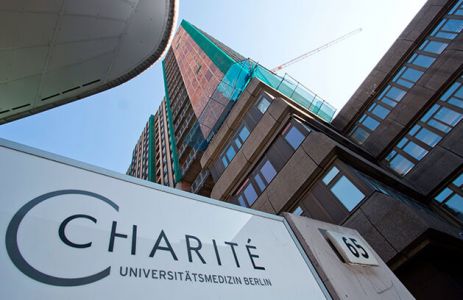
- The Department of Endocrine Surgery at the Charité University Hospital. The department is headed by Professor Johann Pratschke.
- The Clinic for General, Visceral and Endocrine Surgery at the Evangelical Bethesda Hospital in Duisburg, headed by Professor Dietmar Simon.
- Department of General, Visceral and Transplant Surgery at Heidelberg University Hospital. Head of the department is Professor Franck Billmann.
- Department of Endocrine Surgery at Schön Clinic Hamburg. Head of the department is Professor Volker Fendrich.
Find out which treatment method is best for you by booking a "Second Opinion" consultation
Thyroid cancer – prognosis
Life expectancy for thyroid cancer depends on the type of tumour and the stage of the disease. Therefore, in order to prescribe the optimal treatment, it is very important to undergo detailed diagnostics and determine the stage of the disease.
When papillary thyroid cancer is detected, the prognosis is most favourable. In 90% of patients, survival is more than 10 years.
Follicular thyroid cancer also has a relatively good prognosis: the ten-year survival rate is 50 to 95%, depending on the degree of penetration of the disease into the surrounding tissues.
The prognosis is slightly worse for patients with medullary thyroid cancer. In this case, the ten-year survival rate is about 50%.
Anaplastic thyroid cancer is virtually incurable with the current level of medical development. The average life expectancy of patients in this case is only six months after diagnosis.
Regardless of the type and stage of the disease, thyroid cancer treatment should only be carried out in specialised medical centres.
To receive a cost estimate for thyroid cancer treatment in Germany, send us an online request or contact us by phone at +49 170 62 47 020.