Glaucoma – Causes, Symptoms, Surgery
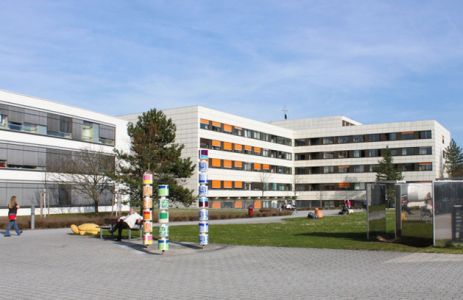
Experts in ophthalmic surgery at the Sulzbach Eye Clinic — one of the leading ophthalmology clinics in Germany — explain how glaucoma is treated, what types of glaucoma surgeries exist, how these procedures are performed, and present innovative surgical techniques for glaucoma treatment in Germany.
What is glaucoma?
Glaucoma is the most common disease affecting the optic nerves. As a result of elevated intraocular pressure or impaired blood circulation, the nerve fibers of the retina and the optic nerve gradually die. This leads to vision loss — first peripheral vision, and later central vision. Without appropriate treatment, the disease can result in blindness.
Glaucoma is the second most common cause of blindness worldwide.
What role does intraocular pressure play?
The main risk factor for developing glaucoma is elevated intraocular pressure.
The anterior and posterior chambers of the eye are filled with clear aqueous humor, which nourishes internal eye structures and drains through a specialized outflow channel. When the production and drainage of this fluid become imbalanced due to a malfunctioning drainage system, intraocular pressure increases.
A particularly unfavorable combination is high intraocular pressure together with low blood pressure in the optic nerve head.
Symptoms of glaucoma
Glaucoma is a very insidious disease. The progressive loss of nerve fibers develops slowly and may remain unnoticed for many years. As a result, characteristic visual field defects (scotomas) develop. By the time a patient notices these changes, part of the optic nerve is already damaged, which is why glaucoma is often detected only in advanced stages.
As the disease progresses, different symptoms may occur.
- Primary open-angle glaucoma: a sharp increase in intraocular pressure may lead to epithelial edema — fluid accumulation in the outer and middle layers of the cornea. As a result, patients may see colored rings or halos around lights or experience hazy vision. Later, visual field loss may occur. Without timely and effective treatment, blindness may follow.
-
Acute angle-closure attack: this usually affects only one eye. Typical symptoms include redness, a firm eyeball on palpation, a dilated non-reactive pupil, eye pain, and vision disturbances. The attack can also cause severe unilateral headache, nausea, and vomiting.
-
Primary congenital glaucoma: a congenital form that appears during the first months of life. Infants may have excessive tearing, pronounced light sensitivity, tightly squeezed eyelids, and enlarged eyes.
-
Secondary glaucoma: may be asymptomatic or present with complaints similar to primary open-angle glaucoma or acute glaucoma attacks, particularly when intraocular pressure rises sharply.
Diagnosis of glaucoma
Diagnosis includes a comprehensive eye examination: assessment of visual acuity, evaluation of the anterior and posterior segments of the eye, and measurement of intraocular pressure (tonometry).
However, measuring eye pressure alone is often insufficient. Glaucoma may develop even with “normal” pressure values. Although pressures between 9 and 21 mmHg are considered normal, for some individuals even these values may damage the optic nerve, while others remain unaffected by higher pressures.
Therefore, an accurate diagnosis requires more than pressure measurement. It is essential to examine the optic nerve, assess visual fields (perimetry), and analyze nerve fiber layers — typically using optical coherence tomography (OCT). Measuring corneal thickness is also standard, as it is an independent risk factor.
Today, additional diagnostic methods include evaluating corneal biomechanics ("stiffness") and studying retinal and optic nerve blood flow. In some cases, observing the disease over several months or even years is necessary for a reliable diagnosis.
Glaucoma treatment
Lowering intraocular pressure is the only effective method of treating glaucoma. If optic nerve damage progresses despite topical medications or if the patient is intolerant to them, glaucoma surgery is required.
Medication therapy
A large selection of preservative-free eye drops is now available. These drops reduce intraocular pressure and are better tolerated with fewer allergic reactions. Some drops reduce fluid production in the eye; others improve its outflow. Both mechanisms help lower pressure.
Therapy is individualized. Since not all drops work equally well for everyone, doctors must first ensure that the medication lowers pressure sufficiently. Target pressure is achieved when values remain within an individually defined safe range.
Because intraocular pressure fluctuates throughout the day, 24-hour monitoring is ideal. Several medications may be combined, but typically not more than three active substances or two types of drops (a single and a combined preparation).
Using more drops can cause them to wash each other out or even counteract one another. Multiple daily instillations also make adherence difficult and can interfere with normal life.
Surgical treatment of glaucoma
For some patients, optic nerve damage progresses despite proper medical therapy. In such cases, surgery becomes necessary. For decades, glaucoma surgery was considered complex and risky: most methods used today date back to the 1960s and carry a significant risk of complications. As a result, many patients refuse surgery even when medications no longer help — often unaware that glaucoma procedures have been significantly improved in recent years.
Consultations with leading ophthalmologists in Germany.
Make an appointment now: +49 170 62 47 020
Why not trabeculectomy?
Trabeculectomy was considered the gold standard for many decades and is still used in many clinics. However, German clinics now rely almost exclusively on modern, minimally invasive glaucoma surgery (MIGS) techniques — for good reason.
During trabeculectomy, aqueous humor is drained externally through an artificially created opening, forming a filtration bleb. This procedure carries significant risks:
- hypotony (abnormally low pressure)
- bleeding
- decreased vision
The main drawback is that 50% of patients develop scarring in the filtration bleb within a year.
When this occurs, intraocular pressure rises again. Although cytotoxic medications (mitomycin C, 5-FU) can reduce scarring, they significantly increase complication rates.
Micro-invasive glaucoma surgery (MIGS)
Instead of creating an artificial external drainage pathway, non-penetrating MIGS procedures enhance the eye’s natural internal drainage system. This approach is safer, more efficient, and offers a faster recovery.
Advantages of MIGS:
- No need to discontinue glaucoma drops before surgery
- Restoration of natural drainage instead of implanting artificial shunts
- Increased safety (no opening of the eyeball)
- Shorter, less traumatic procedure
- No cytotoxic agents required
- Very low complication rate
- No scarring of filtration blebs
- No postoperative hypotony
- Rapid healing
- No prolonged follow-up required
- Proven long-term results
Canaloplasty
Canaloplasty is a relatively new technique that has gained recognition over the last decade due to its gentle and effective approach. It uses a microcatheter — similar to those used in cardiac surgery — to dilate the eye’s natural drainage canal, which is only about 0.25 mm thick.
A tensioning suture left inside the canal keeps it open and improves natural fluid outflow. No artificial external drainage is required. Recovery is fast, and most typical complications associated with trabeculectomy are avoided.
Trabeculotomy 360°
A minimally invasive method used to enhance pressure reduction after canaloplasty if needed. This is a major advantage over other glaucoma surgeries, which often need to be completely redone if the initial result is insufficient.
Suprachoroidal drainage using a collagen implant
A technique developed at the Sulzbach Clinic and increasingly used as an alternative to canaloplasty. Currently, it is used in one out of three glaucoma drainage surgeries performed at Sulzbach. It is especially effective in achieving very low intraocular pressure levels.
Micro-stents
The latest micro-stents are increasingly used to treat early and moderate glaucoma. They are exceptionally soft and do not cause irritation. Since they provide only moderate pressure reduction, they are typically used in addition to standard non-penetrating glaucoma procedures.
We organise glaucoma treatment in Germany at short notice:
+49 170 62 47 020